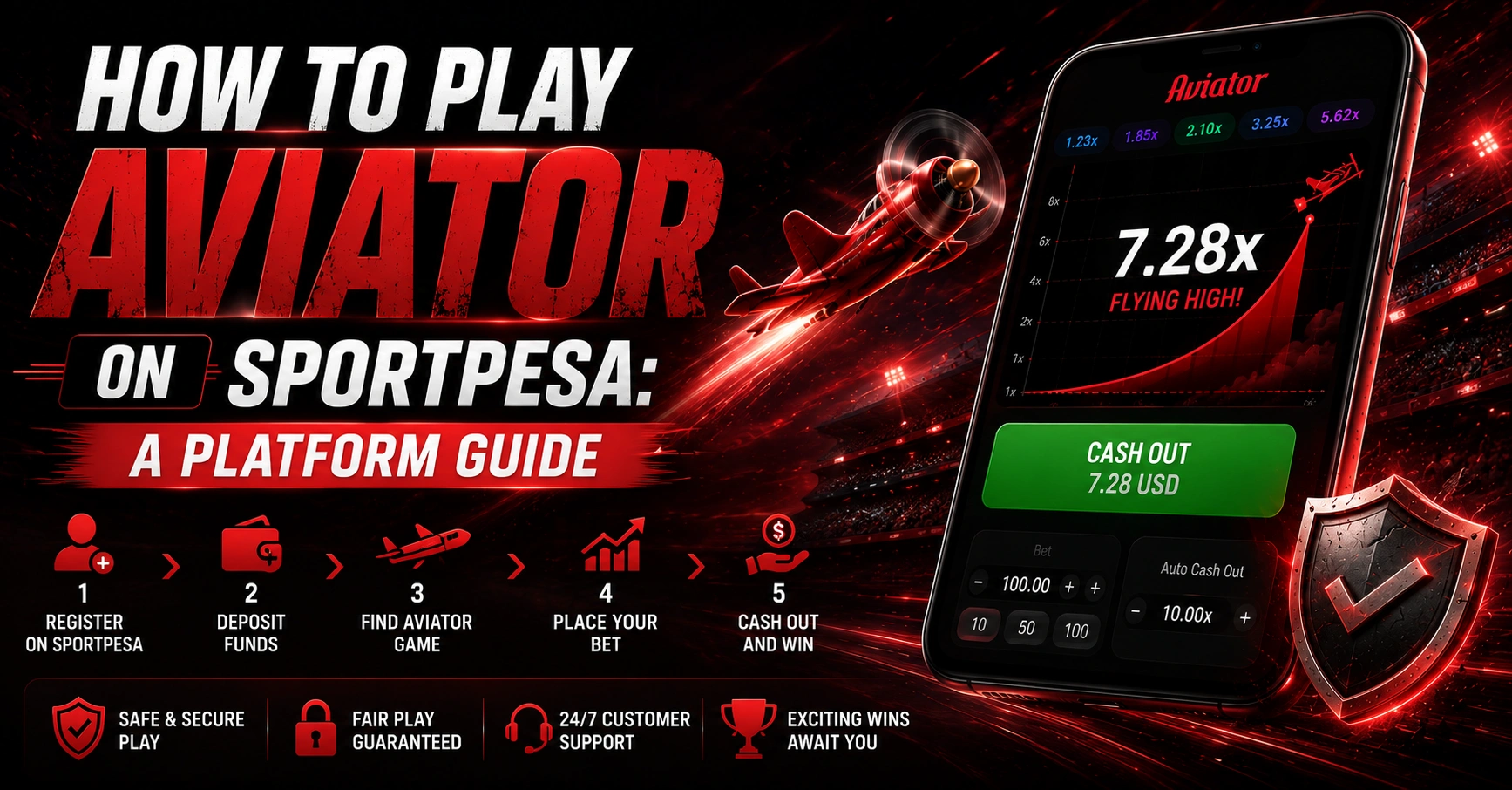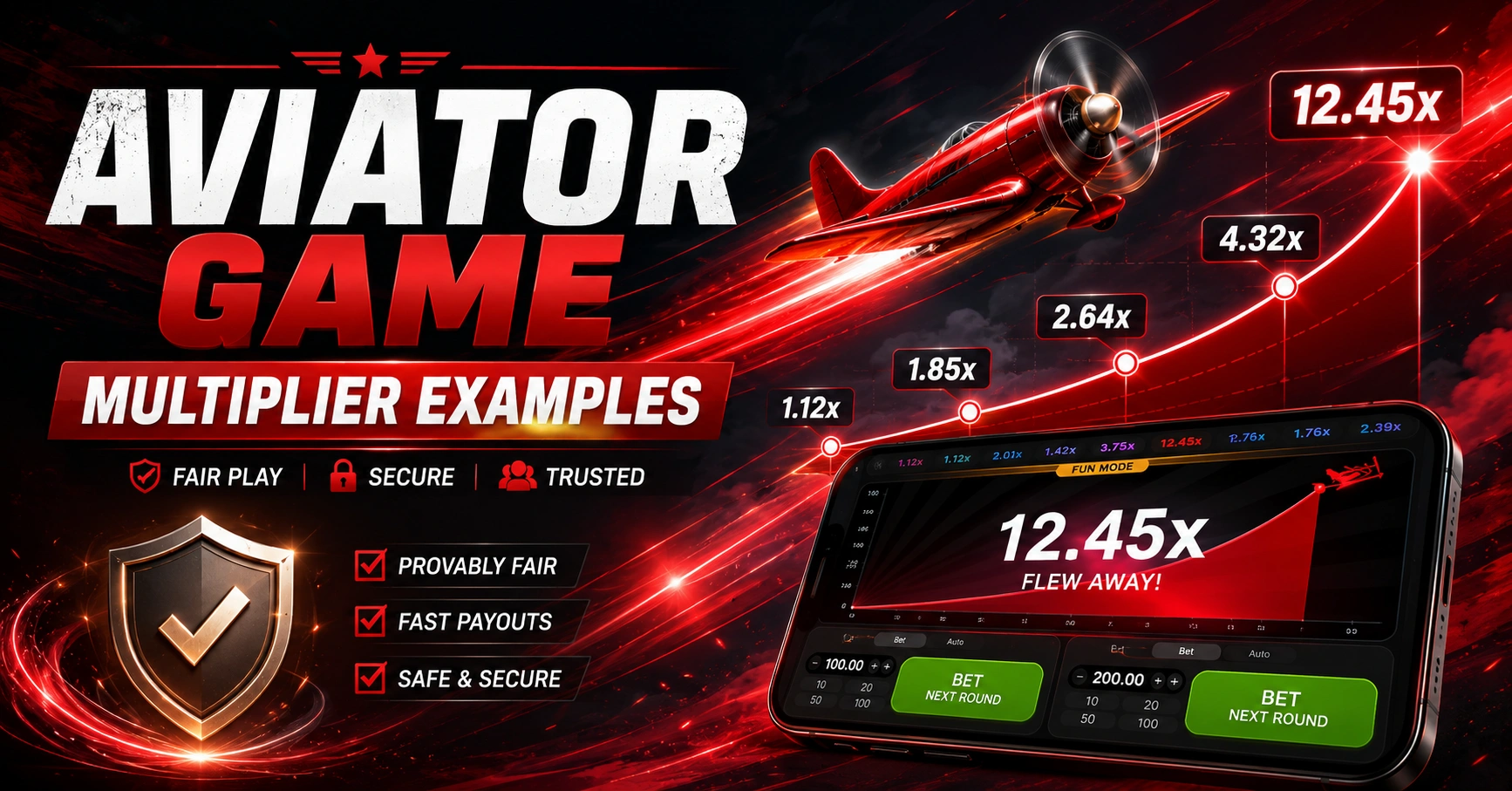
Aviator is a fast-paced crash-style game built around a rising multiplier and a simple cash-out mechanic. For beginners, trying a demo version can be a useful way to understand the interface and basic game flow before considering real-money gameplay.
However, Aviator demo and real-money gameplay are not the same experience from a user’s perspective. The core game mechanics may be similar, but the financial consequences, decision-making, emotional pressure, and level of risk are very different.
In this guide, we compare Aviator demo vs real-money gameplay so you can understand what changes, what remains similar, and what beginners should know before moving from practice gameplay to real-money wagering.
Aviator Demo vs Real-Money Gameplay at a Glance
| Feature | Aviator Demo | Real-Money Gameplay |
|---|---|---|
| Main Purpose | Practice and learning | Real-money wagering |
| Financial Stake | No real financial stake | Real funds are involved |
| Game Interface | Used to learn the controls | Used for actual wagering |
| Multiplier | Used to demonstrate gameplay | Determines the potential payout |
| Cash-Out | Practice the mechanic | Can affect the actual result of a wager |
| Financial Risk | No wagering loss | Money can be lost |
| Best Suited For | Beginners and learners | Users who understand the risks |
| Emotional Pressure | Generally lower | Can be higher because real money is involved |
The most important distinction is simple: demo gameplay is primarily for learning, while real-money gameplay involves actual financial risk.
What Is Aviator Demo Gameplay?
Aviator demo gameplay is a practice environment that allows users to become familiar with the game’s interface and mechanics without placing an actual financial stake.
The game normally revolves around an aircraft and a multiplier that increases as the round progresses. The player can observe how the multiplier works and learn how the cash-out function operates.
A legitimate demo experience can be useful for beginners because it allows them to understand:
- How a game round starts
- How the multiplier changes
- Where the betting controls are located
- How the cash-out function works
- How round history may be displayed
- How the game interface responds during a round
- How quickly rounds can progress
If you want detailed information about the demo itself, see our dedicated Aviator Game Demo guide rather than treating this comparison article as a second demo tutorial.
What Can You Learn From Aviator Demo?
The main value of demo gameplay is familiarization.
A new player can use a demo environment to understand the basic sequence of a round without immediately exposing real funds to the game.
Understanding the Multiplier
The multiplier is one of the central elements of Aviator gameplay. It rises during the round until the round ends.
Demo gameplay can help beginners understand visually how this multiplier behaves.
Learning the Cash-Out Mechanic
Cash out is another important part of the game.
Players can use demo gameplay to understand where the cash-out control appears and how the process works before dealing with real financial consequences.
Becoming Familiar With the Interface
A demo can also help users learn the location of:
- Bet controls
- Cash-out controls
- Multiplier display
- Game history
- Auto-cashout settings, where available
- Balance or virtual balance indicators
The purpose is to make the interface easier to understand.
What Is Real-Money Aviator Gameplay?
Real-money Aviator gameplay involves placing a wager using actual funds.
The underlying game concept may look familiar to someone who has already used the demo, but the consequences are completely different.
With real-money gameplay, users need to consider:
- The amount being wagered
- Available account balance
- Potential winnings
- Potential losses
- Cash-out decisions
- Personal spending limits
- Responsible gaming
A real-money wager should never be viewed as guaranteed income. The outcome of an individual round cannot be guaranteed simply because a player has practiced in demo mode.
Aviator Demo vs Real-Money Gameplay: Key Differences
Financial Risk
This is the biggest difference.
With demo gameplay, there is no real-money wagering loss when the demo uses virtual funds.
With real-money gameplay, the amount placed on a wager can be lost depending on the outcome and the player’s cash-out decision.
For this reason, beginners should understand the financial risk before moving from practice gameplay to real-money wagering.
Purpose of Gameplay
Demo gameplay is primarily educational.
It allows users to become familiar with the interface and mechanics.
Real-money gameplay has a different purpose because an actual financial stake is involved.
The distinction can be summarized as:
Demo = practice and familiarization
Real money = wagering with financial consequences
Betting and Stakes
A demo may use virtual credits or simulated balances, depending on the implementation.
Real-money gameplay involves actual funds. The selected stake therefore matters because it directly affects the potential financial outcome.
Players should never select a stake simply because they believe a particular multiplier is guaranteed.
Cash-Out Decisions
The cash-out mechanic is important in both environments, but the consequences are different.
In demo gameplay, cash-out decisions are primarily a way to learn how the mechanic works.
In real-money gameplay, the decision can affect the actual outcome of a wager.
This difference can also create more emotional pressure when real money is involved.
Emotional Experience
Demo gameplay generally removes the immediate financial pressure associated with losing real funds.
Real-money gameplay can feel very different because players know that their decisions may affect their actual balance.
This can lead to emotional decisions such as:
- Increasing stakes after a loss
- Increasing stakes after a win
- Trying to recover losses quickly
- Continuing to play longer than planned
- Making decisions based on frustration or excitement
Recognizing these differences is an important part of responsible gaming.
Are Aviator Multipliers Different in Demo and Real-Money Gameplay?
The answer depends on the specific implementation and platform.
The important point is that players should not assume that a short demo session can be used to predict future real-money rounds.
The multiplier represents the progression of the round, and the round ends at a particular point. Players need to understand that previous multipliers do not provide a guaranteed prediction of the next result.
For example, seeing several low multipliers in succession does not mean that a high multiplier is automatically “due.”
Likewise, seeing a very high multiplier in demo gameplay does not mean the next real-money round will produce a similar result.
Does Winning in Demo Mean You Will Win With Real Money?
No.
A successful demo session does not guarantee successful real-money gameplay.
Demo mode can help you understand:
- The interface
- Game controls
- Multiplier movement
- Cash-out functionality
- Round progression
But it cannot guarantee future results.
A player may perform well during one demo session and experience a completely different outcome during another session. The same principle applies when moving from practice gameplay to real-money wagering.
Therefore, demo gameplay should be treated as a way to learn the mechanics, not as proof that a particular strategy will generate guaranteed profits.
Common Misconceptions About Aviator Demo and Real-Money Gameplay
“If I win in demo, I will win with real money.”
Demo success does not guarantee real-money success. Practice can improve familiarity with the interface, but it cannot remove the uncertainty associated with individual game rounds.
“A high multiplier means another high multiplier is coming.”
Previous results do not guarantee future results. A sequence of low or high multipliers should not be treated as a reliable prediction system.
“Several low rounds mean a high round is due.”
This is another common misconception. A previous sequence does not create an obligation for the next round to produce a particular result.
“A predictor can guarantee the next Aviator multiplier.”
Be cautious with websites, applications, groups, or individuals claiming to know the exact future multiplier. Claims of guaranteed prediction should not be treated as proof of future results.
“Demo gameplay proves a strategy works.”
A strategy that appears successful during a short demo session may not produce the same outcome over time. Short-term results should not be confused with guaranteed performance.
Is Aviator Demo Better for Beginners?
For someone who is completely new to Aviator, a legitimate demo environment can be a useful starting point.
It allows beginners to become familiar with the game without immediately putting real money at risk.
A beginner can use demo gameplay to understand:
- How a round starts
- How the multiplier increases
- Where the cash-out control is located
- How the interface responds
- How quickly rounds progress
- How available features work
Once the mechanics are understood, the player can make a more informed decision about whether real-money gameplay is appropriate for them.
However, learning the interface does not remove the financial risk associated with real-money wagering.
Demo Gameplay vs Real-Money Gameplay: Which Should You Choose?
There is no universal answer because the two modes serve different purposes.
Choose demo gameplay if your main objective is to:
- Learn the interface
- Understand the multiplier
- Practice cash-out
- Explore game controls
- Familiarize yourself with round progression
Real-money gameplay should only be considered by adults who understand the financial risks and are comfortable with the possibility of losing their wager.
If you’re new to the game, starting with a legitimate demo can help you understand the mechanics before making any decision involving real funds.
What to Consider Before Real-Money Gameplay
Real-money wagering requires more than simply understanding how the game works.
Set a Personal Spending Limit
Decide how much you can afford to lose before playing. Never use money needed for essential expenses.
Don't Chase Losses
A previous loss should not automatically lead to a larger wager. Trying to recover losses quickly can result in increasingly risky decisions.
Don't Treat Gambling as Income
Aviator and other wagering games should not be considered a guaranteed way to make money.
Take Breaks
Fast rounds can encourage continuous play. Regular breaks can help prevent impulsive decisions.
Understand the Rules
Before using real funds, make sure you understand the applicable game rules, platform terms, and any restrictions that apply to you.
Use Responsible Gaming Tools
Where available, use tools such as deposit limits, session limits, reality checks, or self-exclusion options.
How Demo Experience Can Help Before Real-Money Gameplay
A demo can provide useful preparation without creating financial exposure.
For example, a beginner can first learn:
Step 1: Understand the game interface.
Step 2: Observe the multiplier during different rounds.
Step 3: Learn how the cash-out control works.
Step 4: Explore available settings such as auto cash-out, if provided.
Step 5: Review round history and understand what information it shows.
Step 6: Decide whether real-money gameplay is appropriate based on an understanding of the risks.
The purpose of these steps is education and familiarity—not guaranteeing future winnings.
Aviator Demo vs Real-Money Gameplay: Final Verdict
Aviator demo and real-money gameplay may share the same basic game concept, but they serve very different purposes.
Demo gameplay is primarily useful for learning the interface, understanding the multiplier, practicing the cash-out mechanic, and becoming familiar with round progression without risking real funds.
Real-money gameplay introduces actual financial consequences. A player’s stake can be won or lost, and decisions may carry greater emotional and financial pressure.
For beginners, the demo environment can therefore be a useful way to learn the mechanics first. However, success in demo mode should never be interpreted as a guarantee of success with real money.
Understanding the difference between practice gameplay and real-money wagering is one of the most important steps before making an informed decision.
Related Aviator Guides
If you want to learn more about the game, explore our related resources:
- Aviator Game – Complete information about Aviator gameplay and features.
- Aviator Game Demo – Learn about the demo experience and practice gameplay.
- How to Play Aviator Game – Understand the basic gameplay process.
- Aviator Game Rules – Learn the important rules and terminology.
- Aviator Game Strategy & Tips – Understand common approaches and their limitations.
- Aviator Multiplier – Learn how the multiplier works.
- Aviator Cash Out – Understand the cash-out mechanic.
- Aviator Game FAQ – Find answers to common Aviator questions.